
DevOps Engineer
- Industry-Relevant Curriculum
- Hands-On Training
- Internship Opportunities
- Certification Preparation
- Placement Assistance


About Program
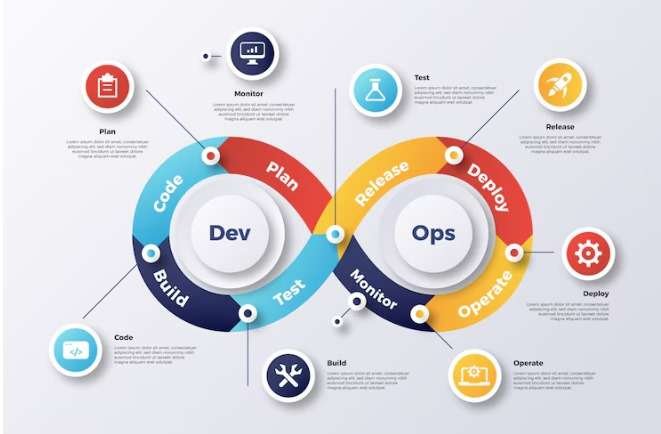
The DevOps Engineer course is designed to bridge the gap between software development and IT operations, fostering efficient and collaborative environments. It covers key principles such as automation, continuous integration/continuous deployment (CI/CD), and infrastructure as code. Participants gain hands-on experience with essential tools like Docker, Kubernetes, Jenkins, and Ansible. The curriculum includes monitoring and logging, cloud computing, and version control systems. By the end of the course, learners are prepared to streamline workflows, enhance software quality, and accelerate release cycles, making them valuable assets in modern, fast-paced development environments. This comprehensive training ensures proficiency in key DevOps practices and tools.
Course Curriculum
1. Python Programming-1
| Days | Live Online Session |
|---|---|
|
Day1 |
Introduction to Python and Basic Syntax |
|
Day2 |
Control Structures |
|
Day3 |
Functions |
|
Day4 |
Data Structures |
|
Day5 |
File Handling |
2. Python Programming-2
| Days | Live Online Session |
|---|---|
|
Day6 |
Modules, Libraries, and Exception Handling |
|
Day7 |
Classes and Objects |
|
Day8 |
Object-Oriented Programming-1 |
|
Day9 |
Object-Oriented Programming-2 |
|
Day10 |
Hands-On Practice and Hands On Guided Project |
3. Prompt Engineering
| Days | Live Online Session |
|---|---|
|
Day11 |
Introduction to Prompt Engineering and AI Language Models |
|
Day12 |
Crafting Effective Prompts |
|
Day13 |
Prompt Engineering for Specific Applications |
|
Day14 |
Ethical Considerations and Advanced Techniques |
|
Day15 |
Hands-on Practice with AI Tools |
4. AI Coding Assistants
| Days | Live Online Session |
|---|---|
|
Day16 |
Introduction to AI-Powered Coding Assistants |
|
Day17 |
AI-Powered Code Generation |
|
Day18 |
Debugging and Code Optimization with AI |
|
Day19 |
Advanced Features of AI Coding Assistants |
|
Day20 |
Hands on practice with GitHub Copilot, Amazon Q, Google Gemini |
5. Linux Basics
| Days | Live Online Session |
|---|---|
|
Day21 |
Introduction to Linux and Basic Commands |
|
Day22 |
User and File Permissions Management |
|
Day23 |
User and File Permissions Management |
|
Day24 |
Package Management and Disk Management |
|
Day25 |
Networking Basics and System Monitoring |
6. Networking Essentials
| Days | Live Online Session |
|---|---|
|
Day26 |
Introduction to Networking |
|
Day27 |
TCP/IP Model and IP Addressing |
|
Day28 |
Subnetting and DHCP |
|
Day29 |
Application Layer Protocol |
|
Day30 |
Network Troubleshooting and Basic Security |
7. Databases
| Days | Live Online Session |
|---|---|
|
Day31 |
Introduction to SQL/NoSQL Databases |
|
Day32 |
SQL Querying |
|
Day33 |
Database Normalization & Indexing |
|
Day34 |
NoSQL Databases |
|
Day35 |
Hands-on Guided Project Using Python & MongoDB |
8. Web Development using Flask
| Days | Live Online Session |
|---|---|
|
Day36 |
Introduction to Flask and Application
Setup |
|
Day37 |
Working with Templates and Static Files |
|
Day38 |
Handling Forms and User Input |
|
Day39 |
Database Integration with FlaskSQLAlchemy |
|
Day40 |
Authentication and Deploying Flask
Applications |
9. Introduction to Cloud Computing
| Days | Live Online Session |
|---|---|
|
Day41 |
Introduction to Cloud Computing,Core
Cloud Services
|
|
Day42 |
Core Cloud Services |
|
Day43 |
Introduction to Cloud DevOps |
|
Day44 |
Advanced Cloud Computing
|
|
Day45 |
Hands-on Guided Project & Career
Pathways and Hands-On Labs
|
10. Introduction to AWS, Amazon S3
| Days | Live Online Session |
|---|---|
|
Day46 |
Introduction to Cloud Orchestration –
Kubernetes
|
|
Day47 |
GKE |
|
Day48 |
EKS |
|
Day49 |
AZURE |
|
Day50 |
Run Web Application on each cloud
platform |
11. AWS Command Line Interface (CLI) Basics
| Days | Live Online Session |
|---|---|
|
Day51 |
AWS Account Creation and Introduction
to IAM |
|
Day52 |
Amazon S3 – Introduction |
|
Day53 |
Amazon S3 – Advanced Features and
Management
|
|
Day54 |
EC2 Fundamentals |
|
Day55 |
EC2 Monitoring and Management
|
12. DevOps on AWS
| Days | Live Online Session |
|---|---|
|
Day56 |
Install and configure the AWS CLI on
Windows and Apple/Linux |
|
Day57 |
AWS CLI to build and manage simple
AWS systems |
|
Day58 |
AWS CLI for EB Tools (Elastic Beanstalk
Tools)
|
|
Day59 |
AWS CLI for SAM Tools (Serverless
Application Model)
|
|
Day60 |
AWS CLI for templated files
|
13. Code Quality with Amazon CodeGuru
| Days | Live Online Session |
|---|---|
|
Day61 |
DevOps methodologies of culture,
practices, and tools |
|
Day62 |
Amazon’s transformation to DevOps |
|
Day63 |
Categorize and describe key AWS
DevOps services that support the
application lifecycle |
|
Day64 |
Identify the AWS services used to
automate the continuous integration and
continuous delivery (CI/CD) process
|
|
Day65 |
Create and control a CI/CD pipeline |
14. Reviewer and Secure Coding Techniques
| Days | Live Online Session |
|---|---|
|
Day66 |
CodeGuru Reviewer and Amazon
CodeGuru Profiler |
|
Day67 |
CodeGuru Reviewer supports DevOps
practices |
|
Day68 |
CodeGuru Reviewer in your development |
|
Day69 |
Analyze your code with CodeGuru
Reviewer
|
|
Day70 |
Secure Coding Techniques |
1. Program Orientation & Pre-Project Development Courses
| Days | Live Online Session |
|---|---|
|
Day1 |
Course orientation ,Evaluation metrics,Evaluation Criteria,Live and
Recorded Classes details |
|
Day2 |
Agile principle,Scrum Framework,User stories |
|
Day3 |
Repositories and Branching,
Pull Requests and Code Reviews,
GitHub Actions |
|
Day4 |
User-focused approach to solving problems through empathy,
creativity, and iteration |
2. Software Development and IT Operations / CICD
| Days | Live Online Session |
|---|---|
|
Day5 |
Understanding of IT operations concepts such as
system administration, networking, and server
management |
|
Day6 |
Basic knowledge of CI/CD principles and the role
they play in automating the integration |
|
Day7 |
CICD testing, and deployment processes
|
|
Day8 |
Setting up basic CI/CD pipelines and understanding
their benefits in streamlining software delivery |
3. Virtualization and Containerization
| Days | Live Online Session |
|---|---|
|
Day9 |
understanding of containerization concepts,
particularly Docker, including creating, managing |
|
Day10 |
basic cloud computing concepts, including cloud |
|
Day11 |
knowledge of Infrastructure as Code (IaC) |
4. Networking & Introduction to DevOps Concepts
| Days | Live Online Session |
|---|---|
|
Day12 |
networking basics, including IP addresses, DNS,
firewalls, and VPNs |
|
Day13 |
Overview of DevOps: Principles and benefits |
|
Day14 |
Collaboration , cultural shift in DevOps |
|
Day15 |
Automation: Importance and processes |
5. DevOps Tools and Automation
| Days | Live Online Session |
|---|---|
|
Day16 |
Workflow Automation Tools-Git ,Jenkins |
|
Day17 |
Version Control systems-Github and Gitlab
3 setting up CI/CD pipelines
|
6. DevOps Tools and Automation
| Days | Live Online Session |
|---|---|
|
Day18 |
Integration of testing into the CI/CD pipeline |
|
Day19 |
Containers in Devops and Containers vs Virtual
Machine |
|
Day20 |
Docker: Building, deploying, and managing |
7. Docker & Kubernetes
| Days | Live Online Session |
|---|---|
|
Day21 |
Docker images, Dockerfiles, and Docker Hub |
|
Day22 |
Docker Compose for multi-container applications |
|
Day23 |
and Nodes) |
8. Kubernetes
| Days | Live Online Session |
|---|---|
|
Day24 |
Managing deployments, scaling, and rolling
updates with Kubernetes
|
|
Day25 |
Automate configuration and deployment |
9. Cloud-Native Development and DevOps
| Days | Live Online Session |
|---|---|
|
Day26 |
strategies,Scalable |
|
Day27 |
Resilient Applications: Design and
implementation,CI/CD in Cloud Platforms: |
10. Security in DevOps
| Days | Live Online Session |
|---|---|
|
Day28 |
tools,Container Security |
|
Day29 |
Vulnerability management and compliance, Identity and Access Management |
11. Advanced DevOps Implementation
| Days | Live Online Session |
|---|---|
|
Day30 |
configuration, and scaling,Monitoring
|
|
Day31 |
Troubleshooting: Techniques for Kubernetes clusters |
12. Project Work
| Project Work |
|---|
13. Project Work
| Project Work |
|---|
14. Project Work
| Project Work |
|---|
| Sessions | Topics |
|---|---|
|
Session1 |
Importance of Employability Skills Changing Workplaces and Related Skills |
|
Session2 |
Greetings and Introductions
Read English Text With Appropriate Articulation |
|
Session3 |
Effective Phone Conversations
Making Requests |
|
Session4 |
Participating in Buyer Seller Interactions
Saying No or Refusing Politely |
|
Session5 |
Construct Meaningful Sentences
Describe Personal Experiences and Thoughts |
|
Session6 |
Write Effective Notes
Write Effective Resumes and Reports |
|
Session7 |
Making a Great First Impression
Non-verbal Communication |
|
Session8 |
Emotional Intelligence Know Yourself |
|
Session9 |
Positive Attitude
Personal Values & Ethics |
|
Session10 |
Balance Your Body & Mind: The Power of Nutrition and
Physical Activity
Plan and Manage Tasks Within a Timeline |
|
Session11 |
Conflict Management – An Introduction
Understanding Perspectives |
|
Session12 |
Resolve Conflicts to Maintain Relationships
Negotiation in Action Getting to YES |
|
Session13 |
Communicate Effectively to Gain Acceptance
Compare Features and Benefits of Products & Services |
|
Session14 |
Collaborate Across Different Teams
Collaborate to Achieve Team Goals |
|
Session15 |
Introduction to Innovation
Introduction to Critical Thinking |
|
Session16 |
Introduction to Decision Making
Apply Design Thinking |
|
Session17 |
Understand Change
Introduction to Result Orientation |
|
Session18 |
Introduction to Quality
Understand the Impact of Errors |
|
Session19 |
Values and Beliefs – Make Ethical Decisions
Cultural Fitment & Diversity |
|
Session20 |
Prevention of Sexual Harassment (POSH) Act
Behave Appropriately Towards People with Disabilities |
|
Session21 |
Types of Customers – II
Build a Customer-Focused Mindset |
|
Session22 |
Respond Effectively to Customers
Introduction to CRM Systems |
|
Session23 |
Windows Operating System and File Management
Create Documents Using MS Word |
|
Session24 |
Excel Skills to Boost Your Productivity
Useful Excel Features for the Workplace |
|
Session25 |
Useful MS PowerPoint Features for the Workplace
Effective Information Search Online |
|
Session26 |
Communicate using Email
Features of Online Communication Tools |
- Introduction to AI & Big Data.
- Relevance to society and industry.
- Key AI fields: image processing, NLP, etc.
- Career roles in AI & Big Data.
Learning: supervised, unsupervised, and deep learning.
- Importance of data regulations.
- Overview of global data regulation policies (e.g., GDPR).
- Roles in enforcing data standards.
- Best practices in data regulation.
- Different administration tools and frameworks.
- Infrastructure components (storage, networking, etc.).
- Applications and limitations of various tools and platforms.
- CI/CD lifecycle explanation.
- Assess CI/CD strategies and best practices.
- Performance metrics for CI/CD.
- Using CI/CD tools to optimize workflow and feedback.
- Importance of version control.
- Designing and developing staging environments
- Features of common automation tools.
- Developing CI/CD pipelines with automated testing.
- Importance of configuration management.
- Principles and best practices.
- Master-agent architecture in configuration tools.
- Using configuration management tools like Puppet, Chef, and Ansible.
Tools & Softwares
Salary Scale
Job Role
- DevOps Engineer
- Site Reliability Engineer (SRE)
- Release Manager
- Automation Engineer
- Cloud Engineer
- Build and Release Engineer
- Security Engineer
- Monitoring and Logging Engineer
Enroll Now
Our Alumni Work at

Frequently Asked Questions
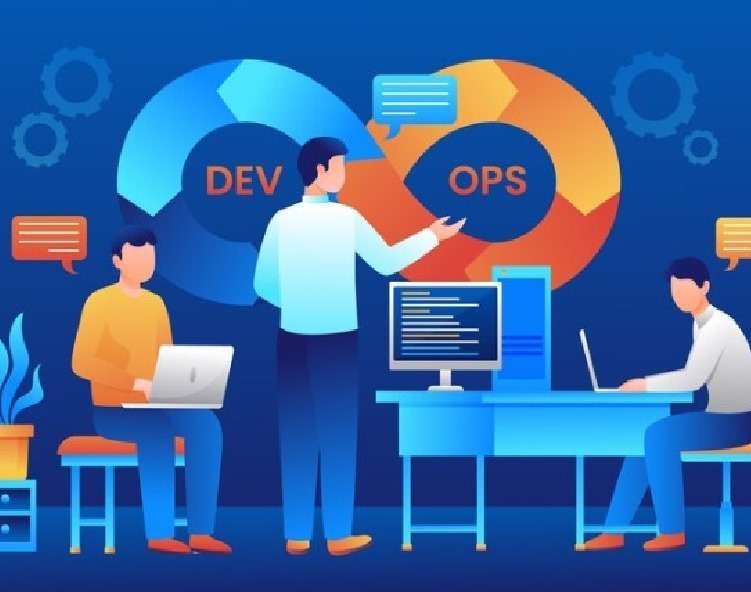
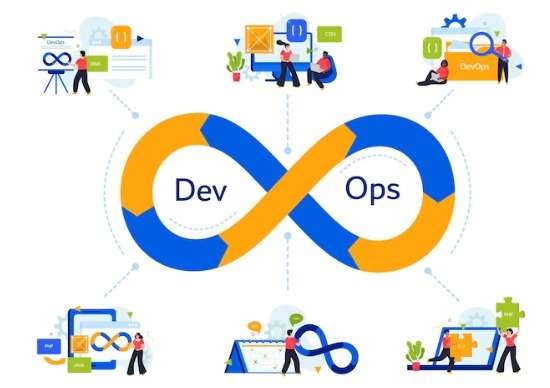
DevOps is a set of practices that combines software development (Dev) and IT operations (Ops) aimed at shortening the development lifecycle and delivering high-quality software continuously.
Essential skills include knowledge of CI/CD pipelines, automation tools, cloud services, scripting languages, and infrastructure as code.
Yes, the course includes practical, hands-on projects to ensure students gain real-world experience.
Upon successful completion, you will receive certifications recognized by industry leaders like NASSCOM, NSDC, and Skill India.
Graduates can pursue roles such as Cloud Engineer, DevOps Engineer, Security Engineer, and Automation Engineer.
Common tools include Jenkins, Docker, Kubernetes, Ansible, Terraform, Git, and monitoring tools like Prometheus and Grafana.
Rooman provides dedicated student success managers to mentor and assist students throughout the course.
Yes, Rooman Technologies offers free demo sessions to give prospective students a preview of the course content and teaching methodology
The instructors are industry experts with extensive experience working with leading technology companies such as CISCO, WIPRO, and Infosys
You can enroll by visiting the Rooman Technologies website, filling out the necessary details, and following the enrollment procedure. For guidance, you can also contact their support team.